
Immaculate Conception, Formosa
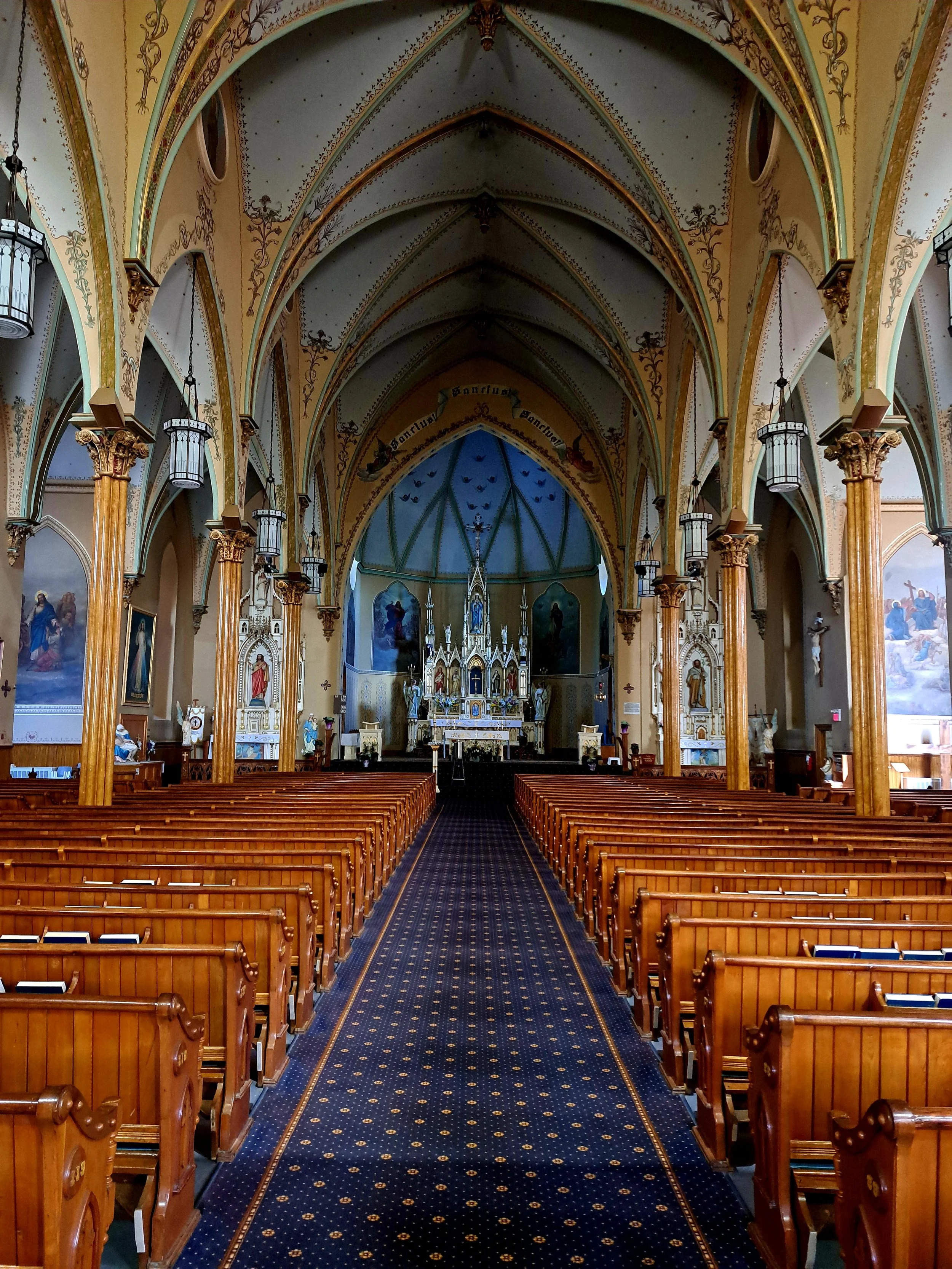
It all started when…The Formosa church, situated at the top of the hill at the north end of the hamlet, was envisioned as a large permanent church for the new and growing Roman Catholic parish. At the time, a wooden church that had been completed in 1857 had required two expansions to handle the increasing number of German immigrants flowing into the area. The architect was charged with designing a stone church capable of seating 1200 to 1500 people.
Rev. Archangelus Gstir arrived to lead the Formosa parish in 1861. Soon afterwards, he oversaw the expansion of the original 1857 wooden church, appealing on behalf of the parishioners to Emperor Ludwig I of Bavaria via the Ludwig Missions-Verein in Munich. He received 2000 Thalers from the King for this initial appeal.
In April 1864, Father Gstir again wrote to Ludwig for funds to build a larger stone church, and subsequently received an additional 1000 Thalers.
Father Gstir returned to his native Tyrol in 1865, and died in 1870.
Church Interior
After the foundation of the new stone church was laid in 1875, work proceeded at an uneven pace. The new pastor of the day (Father Louis Elena) and the parishioners did not want to go into debt, so work progressed as fast as contributions allowed. Much of the materials (limestone hand-cut from local rock, and timber) were obtained locally at no expense other than volunteer labour. Other materials had to be purchased and shipped to the area, including sandstone from Guelph quarries.
The shell of the new church, completed in 1880, was constructed over the original wooden church. The old wooden building remained in use until the new roof was completed, after which it was dismantled and removed.
Construction continued for a few more years, with the new church being consecrated on September 13, 1885.
The total expenditure on church, not including free labour and materials, was $28,000. It is estimated that after exchange, the 3000 Thalers received from Ludwig (used partly for the older wooden church and partly for the new stone church) amounted to about $2000.
The story of the church construction is used as a fictional backdrop in the Jane Urquhart novel The Stone Carvers.